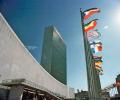
On October 24, the United Nations turns 70. 'The credibility of the UN has been eroded by the fact that the Security Council does not represent the political realities of the world today,' says Ambassador T P Sreenivasan, listing the 10 things the UN needs to do to become more relevant and effective.

It's crucial for Modi to make India an easier place to do business.

Thyrocare founder Arokiaswamy Velumani shares his success story with Anjuli Bhargava as he remembers the one person who stood by him through it all.

And then came the chief moment of Friday. If the courtroom had a soundtrack, Beethoven's 9th would be playing, providing a triumphant, dramatic prologue to the production of this last clip. A woman reporter was asking Mekhail about Sanjeev Khanna. He says clearly, without mincing words, emphatically: 'Never seen him. First time I am hearing his name.'

Only 2.3% of the Indian workforce has undergone formal skill training, as compared to 68% in UK and 52% in the US

The UK-based retailer can add to the best practices it already brings to Tata's retail business.

Currently, the travel time between Mumbai and Delhi varies between 16 and 30 hours.

Land aggregators now want to sell to large corporations because their payment is guaranteed.

Critics have even suggested that India is doing this because it is not prepared to take on the requirements of TFA, with a relatively weak trade infrastructure.
The Union government is keen to ensure financial security for unorganised sector workers

Maharashtra Finance Minister Sudhir Mungantiwar speaks to Prasanna Zore/Rediff.com.
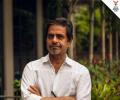
How did Sudarshan Shetty, curator of the Kochi Muziris Biennale, decide what gets to be part of the show and what doesn't?

Shekhar Chakravarty has developed and patented Curvo -- world's first non-linear ropeway system.

The Duncans Goenka group is in a spot of bother over the death of workers and non-payment of dues to employees.
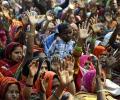
Indians are election junkies, and that includes all of us -- political parties, aspirants for seats, pollsters, pundits parsing straws in the wind, says Shreekant Sambrani

Education remains one of the key focuses of the new government.
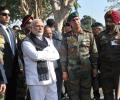
'The attack on the Pathankot base constituted an act of war. Yet Modi's only public comment up until now on that attack has been to blame it on "enemies of humanity".' 'Modi came to power talking tough about Pakistan. But in office, he has pursued a Pakistan policy that has lost both direction and purpose,' argues Brahma Chellaney.

'It all runs on sugar-coated lies. If I like something, I will want to believe it.'

'A series of arrests have illustrated that IS now has a footprint in India.' 'India has been, for a very long time, a key part of Al Qaeda's global jihadist ambitions.'
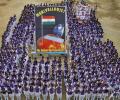
Godrej and some other firms are frustrated at what they say is the slow execution of projects and lack of government support, which are hampering India's efforts to compete with China and Russia as a cheaper option for launching satellites.

...He'd be running a successful aviation business, says Anjuli Bhargava.

'Building on the potential for closer ties is the changing narrative in each country about the other. The Chinese narrative on India has become significantly more positive over the past few years,' says Walter Andersen and Zhong Zhenming.

Most 20-somethings go through a phase of constant doubt -- Is this job right for me? Why I am still single? When will I buy my first car? Was my degree a waste of time?
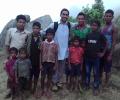
Against all odds, the young and determined Varun Sharma has taken up the responsibility to bring electricity, education and empowerment to a remote tribal village in Odisha, says Manu A B.

When 27-year-old Karthik Kamalakannan founded Skcript with his friend Swathi Kakarla in December 2013, little did he realise that it would become the Pied Piper of India one day.

Countries in the region like Afghanistan, Pakistan and Maldives face serious existential threats from a mix of terrorist groups active in the region and elsewhere

As a child, Sufal Das used to dream of becoming a dhaki. But a life full of adversities, and dwindling popularity of the dhak, has made him regret his dream.
.jpg)
Throughout a quarter century of proxy war, India has shown tremendous restraint in the face of grave provocation. It is inconceivable that any other nation would have refrained from launching trans-LoC operations to eliminate terrorist training camps and interdict known routes of infiltration, says Brigadier Gurmeet Kanwal (retd).

Being a pragmatist Modi is not likely to give preference to China over Japan. Both security and economic aspects are likely to shape Modi's decision in terms of engaging the two biggest economies of Asia, says Sana Hashmi.

Mumbai's famous dabbawalas are reinventing themselves to meet the challenge posed by food delivery portals.

A major criticism of the new law is that it can become an instrument of abuse as it confers the tax enforcement authorities with strong discretionary powers, says Paranjoy Guha Thakurta.

Taxpayer satisfaction is a part of the matrix of key performance indicators of the administration.

This is the joint statement issued by the ministry of external affairs on the visit of US President Barack Obama to India.

Rediff.com's Rajesh Karkera shares his impressions from the Kochi-Muziris Biennale, India's landmark artistic extravaganza.

India Inc has few leaders who are likely to grab headlines in 2015.

Meet Ankit Fadia, the ethical hacker who has been appointed as one of the brand ambassadors for Prime Minister Narendra Modi's Digital India programme.

'Why should the people of Odisha divert water from the Mahanadhi when 13 out of 32 districts are chronically drought prone?' 'Water is a state subject. Can you really nationalise rivers for which you need drastic amendments in the Constitution?'

Real Madrid midfielder Luka Modric is set to miss the rest of the year with a thigh injury, the La Liga leaders said in a statement on Monday.
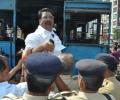
Narendra Rawat, an 'arrest-happy' Congress leader, is expected to launch a fair amount of political tamasha against his rival, Narendra Modi, in Vadodara.
The verdict could impact a range of life choices of Indians, including food habits and sexual orientation.
